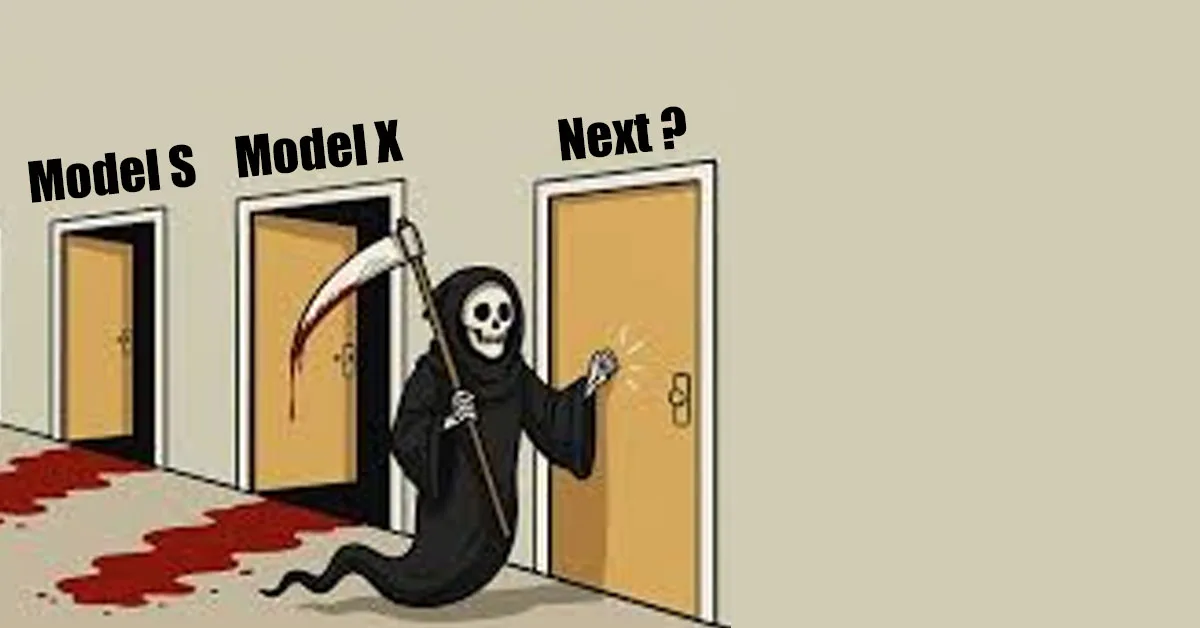
I’m tackling some of the biggest news to hit the EV world in over a decade. During the 2025 Q4 earnings call, Tesla officially announced that it discontinues the Model S and Model X. Production is expected to wind down by the end of Q2 2026, marking a pivotal moment as Tesla discontinues these iconic vehicles.
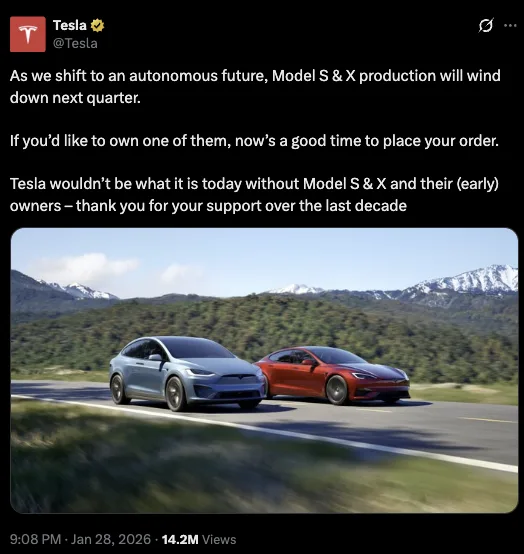
Elon Musk referred to this move as an “honorable discharge.” To me, that means these vehicles have finally fulfilled their original mission. They were the financial engines that funded the research, development, and scaling required to bring the Model 3 and Model Y to the masses. But as the business reality of declining sales sets in, Tesla is repurposing those production lines for the next frontier: Optimus robots.
The news that Tesla discontinues these models has sparked varied reactions among owners and enthusiasts, as they reflect on the impact of this significant decision.
The Business Reality: By The Numbers
While the Model S and X were once the crown jewels of Tesla, they now represent a tiny fraction of the company’s output.
- Peak Era (2017-2018): Combined sales were over 100,000 units per year, accounting for nearly 50% of total deliveries.
- Current State (2025): Combined sales have plummeted to just 18,955 units.
- The “Other” Category: The S and X are now lumped into a category that includes the Cybertruck, representing only 3% of total Tesla deliveries.
Despite the drop in volume, these cars were massive profit drivers. The Plaid variants alone had estimated gross margins between 35% and 50%. They did their job—they funded the Nevada Gigafactory and the global expansion we see today.
Owner Reactions: Nostalgia vs. Progress
I sat down with some OG Tesla owners and friends to get their take on the news.
1. Ian (2008 Roadster & Multi-Tesla Owner)
Ian, who now drives a Lucid Air, shared a bittersweet perspective. “If I let nostalgia get in the way, we’ll never progress,” he said. He credits the Model S with proving that electric cars could be better than gas cars, not just “cleaner.” However, he also noted that the market has evolved. With cars like the Lucid Air offering “unconstrained” luxury, the Model S has more competition than ever.
2. Dom (2023 Model S Plaid Owner)
Dom was shocked by the news. “These are the flagships! That’s what got Tesla established,” he argued. His main concern is long-term support. While Tesla has a great track record of supporting older vehicles, the retooling of the Fremont factory for robotics raises questions about future parts availability for the air suspension and falcon-wing doors.
3. Wil (Former Model S & X Owner, now Cybertruck)
Will sees this as an opportunity for the Model 3 to step up. “Maybe this opens the door for a Plaid Model 3,” he suggested. He believes the Model 3 platform is currently dialed back and could easily fill the performance gap left by the S Plaid if Tesla chose to uncork it.
My Personal Take: A Flawed Masterpiece
As someone who has owned two Model Xs (a 2022 Long Range and a 2023 Plaid), my feelings are complicated.
- The Highs: The panoramic windshield, the effortless power of the Plaid, and the feeling of being “ushered” by the automatic doors are experiences you can’t find elsewhere.
- The Lows: The Model X was, in my opinion, a flawed family vehicle. Between steering rack issues, falcon-wing door sensors, and a lack of overhead storage, it never quite lived up to the “SUV” title for our road-tripping needs.
Ultimately, the Model X felt like a taller, over-engineered version of the Model S. It served its purpose as a “high-speed cruiser,” but as a minivan replacement? It fell short.
What’s the New Flagship?
With the S and X gone, what takes the throne? Is it the Cybertruck, with its 48V architecture and steer-by-wire? Or have the Model 3 and Model Y become the true faces of the brand?
If you’re looking for a luxury sports sedan or a high-tech SUV, the competition is ready. From the Rivian R1S and Lucid Gravity to the Porsche Taycan and Kia EV9, the “flagship” title is up for grabs.