

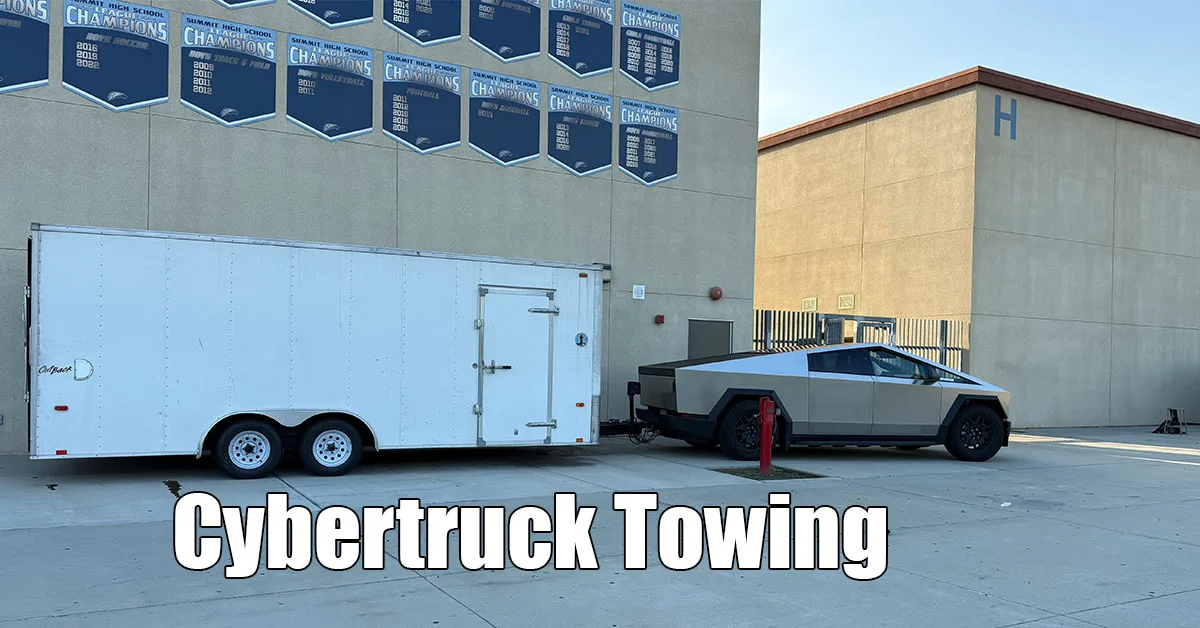
Today marks a significant milestone for the Cybertruck rig. I’ve towed before with my Rivian R1T, but today is the very first time we are putting the Tesla Cybertruck to the test with a heavy load.
My son’s winter drum line has a competition in Los Angeles, and the school asked for parent volunteers to help transport their equipment. We’re hitching up to a dual-axle trailer that I estimate weighs around 5,500 lbs and spans about 19 to 20 feet. Since the destination is over 50 miles away (meaning a 100+ mile round trip), I need to be smart about my state of charge.
Pre-Tow Prep: Range and Hardware
When you’re towing with an EV, the golden rule is to expect your range to be cut in half.
- State of Charge: I topped off at a local Supercharger to reach 89% (278 miles of range). Even though the destination is only 52 miles away, the return trip and the aerodynamic drag of a massive box trailer mean I’ll likely need every bit of that energy.
- The Hitch: Accessing the Cybertruck’s hitch requires removing a plastic cover held in place by three flathead screws. Once removed, you have access to a 2-inch receiver and both 7-pin and 5-pin connectors.
- The Frunk Dilemma: I had to load up the frunk with gear like my Anker portable battery and Starlink. I’ll be honest—the Cybertruck frunk space is pretty disappointing compared to others. If it’s raining, you’re forced to use it because the Vault (bed) isn’t 100% waterproof.
Towing Features: Tesla vs. Rivian
As soon as I plugged in the trailer, the Cybertruck detected it and automatically engaged Trailer Mode.
- Trailer Light Test: This is a feature I love that the Rivian lacks. The Cybertruck can run an automated light sequence so you can walk around and verify the trailer’s turn signals and brake lights are working without needing a second person.
- Brake Gain & Boost: I started with a default trailer brake gain of 5.0.
- Regen Braking: In Trailer Mode, the Cybertruck increases adaptive regeneration. However, this creates a “push-pull” sensation that can be jarring. My buddy Eric from Butter EV suggested dropping the gain significantly—I ended up at 0.5 to make the ride feel smoother.
The Drive: LA Traffic and Efficiency
Towing through Los Angeles County is a specialized kind of stress. Navigating narrow residential streets with cars parked on both sides required me to “hug” the center divider, which is nerve-wracking when you’re pulling a wide trailer.

Efficiency Stats (Leg 1 – 53 Miles):
- Energy Used: 35 kWh
- Efficiency: 652 Wh/mile
- Arrival SOC: 57% (The truck initially predicted 37%, but adjusted upward as I drove).
| Metric | Outbound (Leg 1) | Return (Leg 2) |
| Distance | 53 Miles | 50 Miles |
| Efficiency | 652 Wh/mi | 788 Wh/mi |
| Peak Energy Use | N/A | 81 kWh Total |
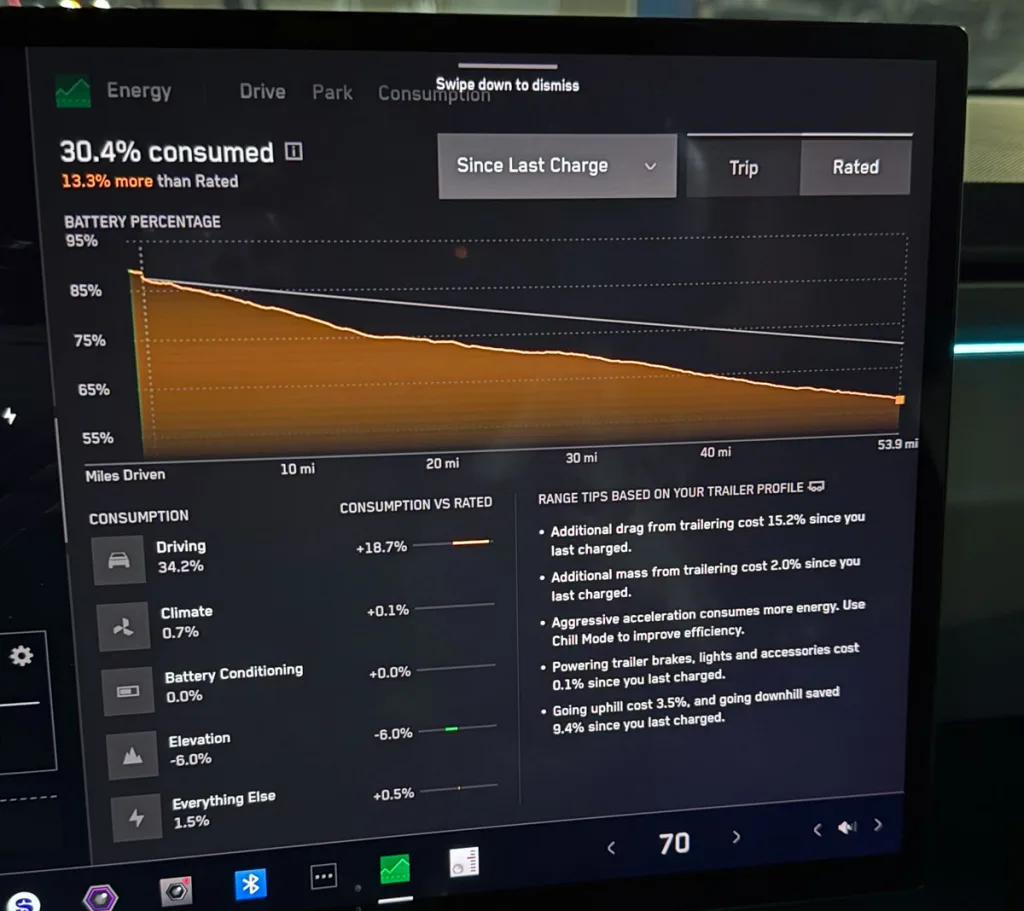
The “Sweaty” Return Trip
On the way back, the truck’s navigation started to panic. It began preconditioning for a Supercharger because it didn’t think we’d make it home. I had to manually cancel the nav and aim for a “midway” point (a Whole Foods in Upland) to see if my arrival SOC would stabilize.
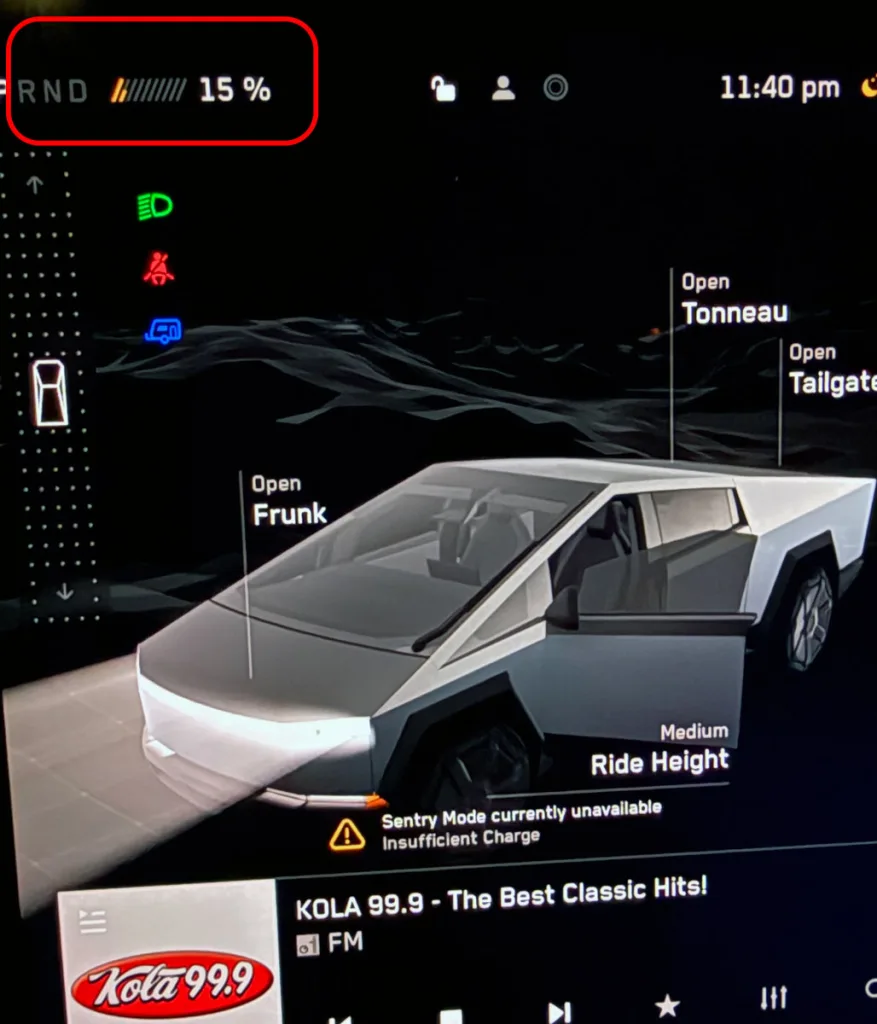
I eventually made it back to my local charger with 14% state of charge. The total trip covered 103 miles and used a massive 81 kWh of energy. The average efficiency for the full trip was 788 Wh/mile.
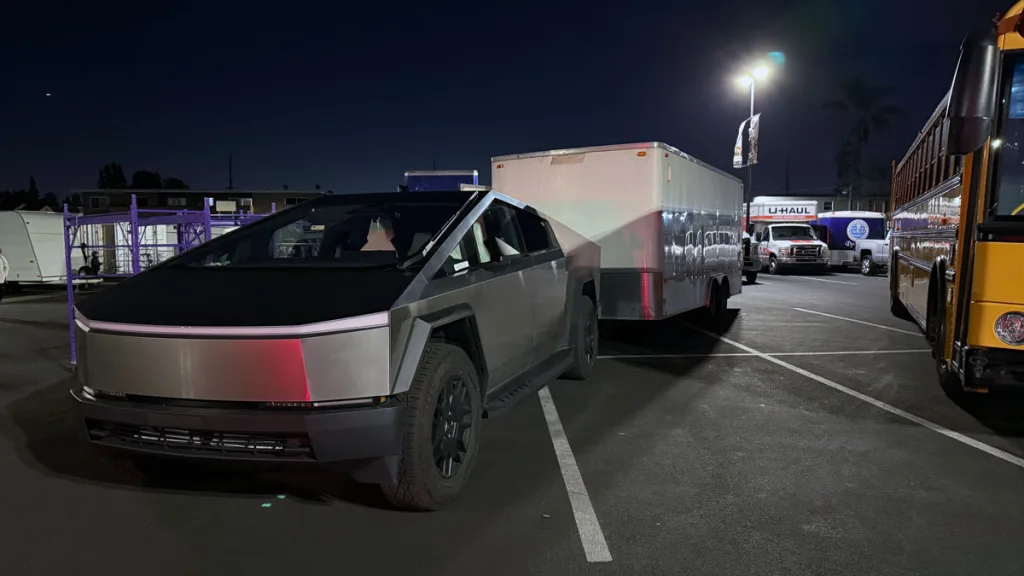
Final Thoughts: Cybertruck vs Rivian R1T
I have to be honest: the Rivian R1T feels better while towing. The Rivian’s software seems more adept at instantly detecting trailer weight and adjusting range estimates. It also feels “lighter” on its feet when pulling a load. The Cybertruck feels heavy and the regen-to-trailer-brake communication needs some software refinement to eliminate that “herky-jerky” feeling.
However, the Cybertruck’s steer-by-wire is a lifesaver when maneuvering in tight spots, and the built-in light test is a pro-grade feature every truck should have.

Leave a Reply