

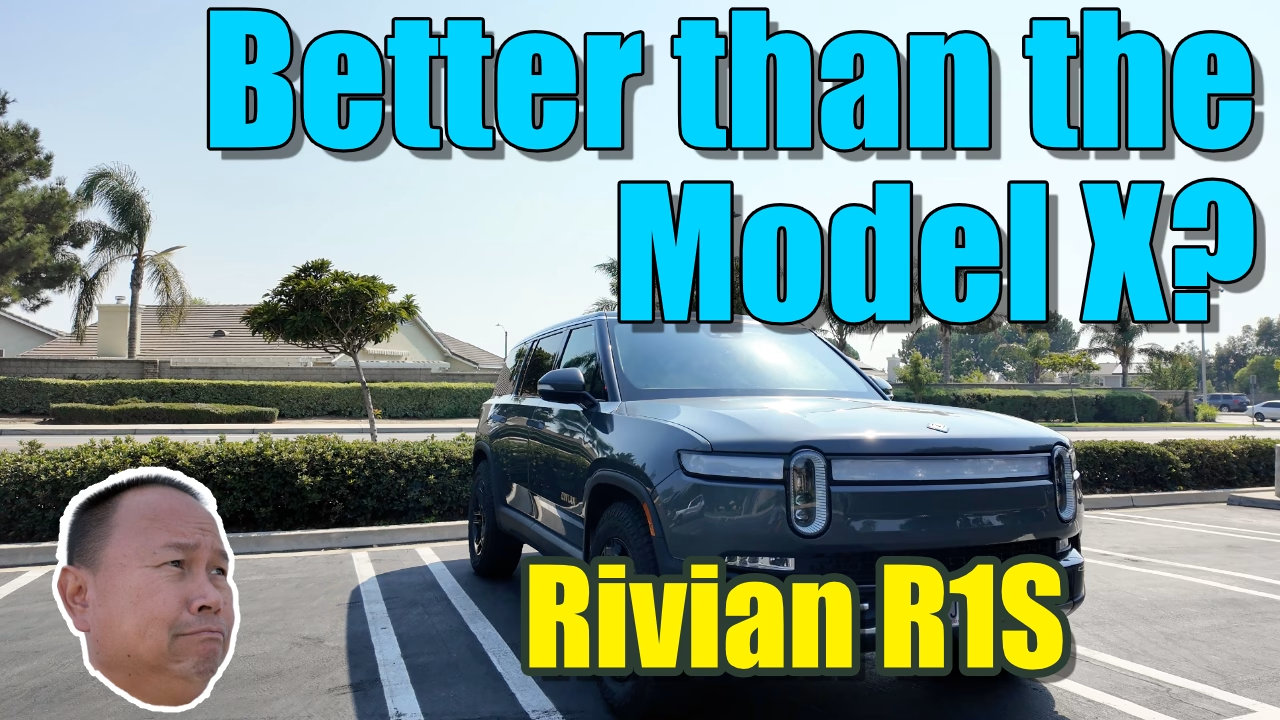
Deciding between two of the most capable electric SUVs on the market isn’t easy. I recently had the opportunity to spend some quality time with a 2023 Rivian R1S Quad-Motor loaner while my R1T was in service, and it gave me the perfect chance to see how it stacks up against our Tesla Model X Plaid.
If you’re on the fence between these two EVs, here is a detailed breakdown of my experience, from daily drivability to cargo space and tech.
Watch the Full Comparison
Want to see these two EVs side-by-side in action? Check out the full video below:
First Impressions & Driving Dynamics
The first thing you notice in the R1S—especially this build with the 20-inch All-Terrain tires—is the presence. While the AT tires are a bit more audible on the road compared to standard road tires [01:03], the R1S feels surprisingly nimble.
My wife, Abby, took it for a spin and noted that it doesn’t feel as heavy as its size suggests [06:42]. In fact, it handles more like a Model Y or a large sedan than a bulky truck [07:35]. However, if you’re coming from a Tesla, be prepared for a more aggressive regenerative braking feel, even on standard settings [04:10].
Utility: The Battle of the Frunks and Trunks
This is where the Rivian really shines. The “boxier” design of the R1S provides a massive advantage in vertical space:
- The Frunk: Unlike the Model X, the R1S frunk is deep enough to fit a standard check-in suitcase with ease [13:32]. It even includes a drain plug, so you can use it as a giant cooler for trips [12:51].
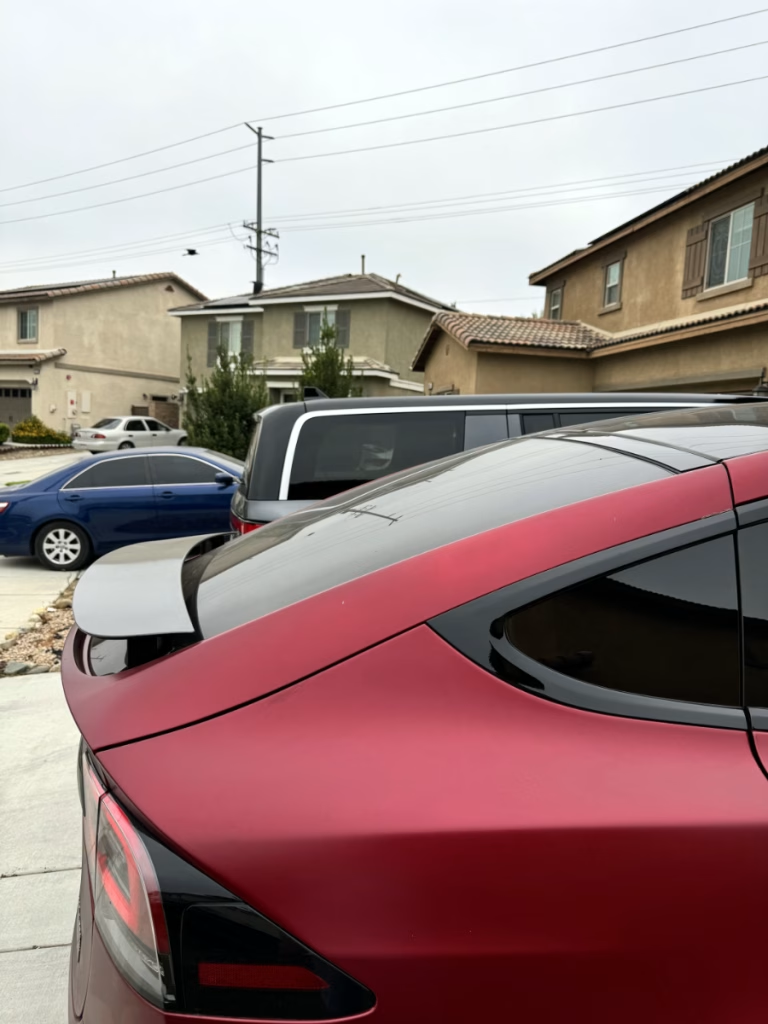
- The Rear Cargo: Because the R1S roofline stays flat all the way to the back, you don’t lose the upper storage area that the Model X’s sloping roof cuts off [16:25]. With the third row up, I was able to fit two large suitcases in the back [19:32].
Interior & Technology
The R1S interior is beautiful, featuring that signature Ashwood trim [20:32]. Like Tesla, Rivian uses a dual-screen layout, but I actually prefer Rivian’s customizable driver display, which allows you to toggle between tire pressure, efficiency, and motor temperatures [21:06].
A few “Rivian-only” perks I love:
- 360-Degree Camera: This makes parking a breeze compared to Tesla’s current vision-only system [35:13].
- Built-in Utilities: The removable Bluetooth Camp Speaker and the door-mounted rechargeable flashlight are touches you just don’t get elsewhere [29:27].
- Onboard Air Compressor: Perfect for airing up after off-roading or just maintaining your tires at home [18:27].
The Verdict: Which One Should You Buy?
It really comes down to your lifestyle.
Lean toward the Tesla Model X if:
- You are a fan of Full Self-Driving (FSD) technology [41:37].
- You want the “Zippiest” performance; while the R1S is fast, the Plaid is on another level [41:53].
- You prefer a softer, more “minivan-like” ride quality for road trips [37:28].
Lean toward the Rivian R1S if:
- You plan on off-roading or want the rugged capability of All-Terrain tires [38:06].
- You need maximum cargo utility and a more spacious third row [44:45].
- You want a vehicle that feels more like a traditional (but high-tech) SUV [37:28].
Ultimately, both are incredible machines. In a perfect world? Get both! [47:06]
If you’re looking to pick up a new EV, feel free to use my referral links in the video description to support the channel
Tesla Referral: https://my.linkpod.site/tesla
Rivian Referral: https://my.linkpod.site/rivian
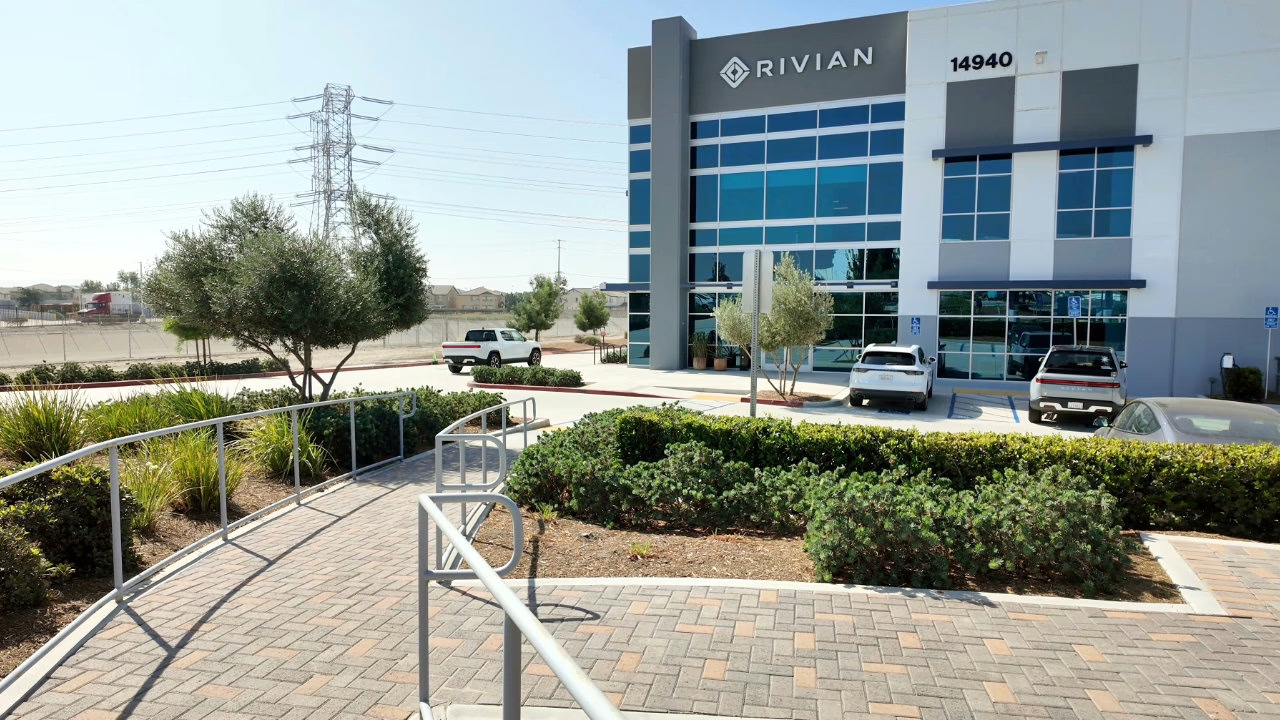
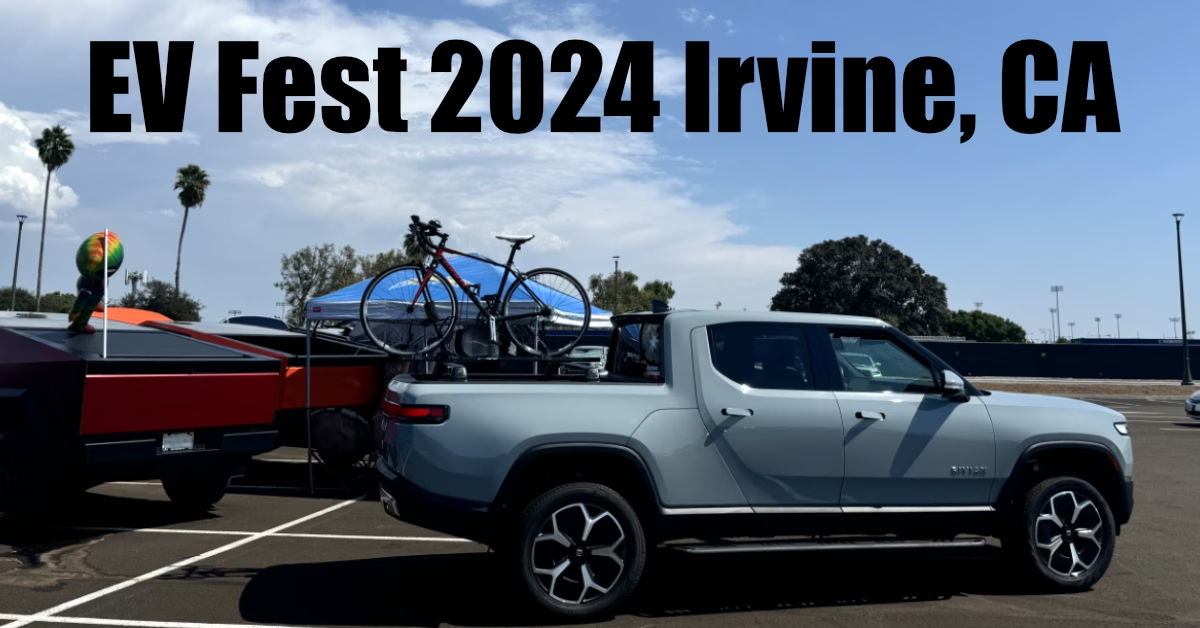
[…] are at the Eastvale Rivian (with the Model X Plaid). We are here to do a deep dive into the Gen 2 Rivian R1S Tri-Motor. We will also conduct a demo […]