

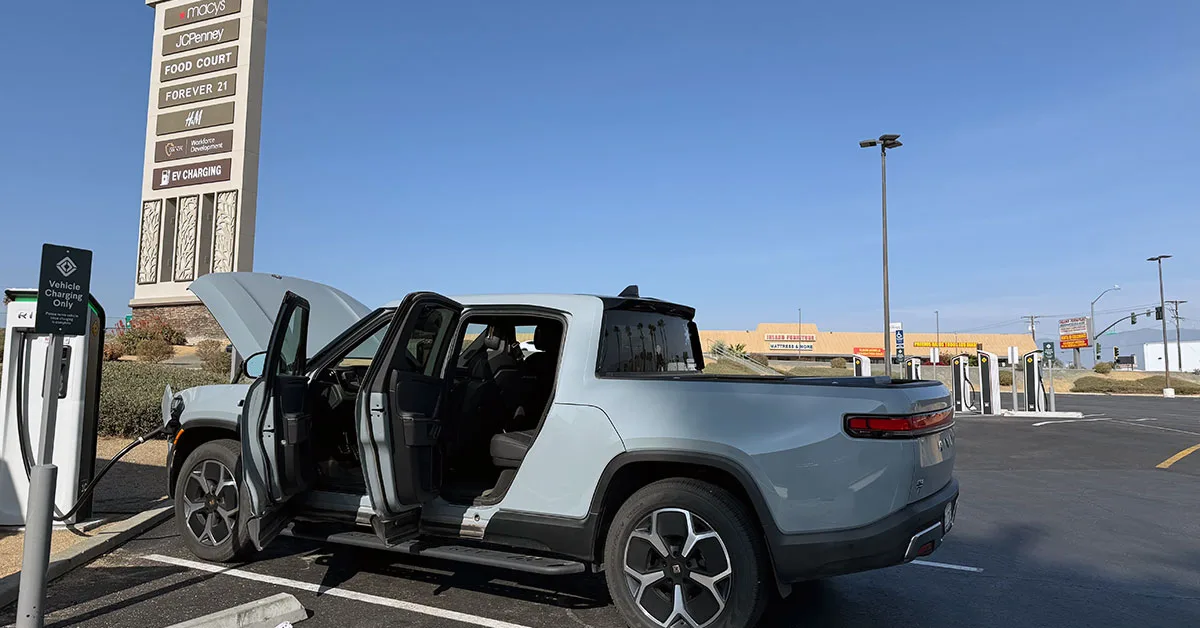
EV road trip planning isn’t rocket science, but it definitely requires more thought than filling up at any gas station.
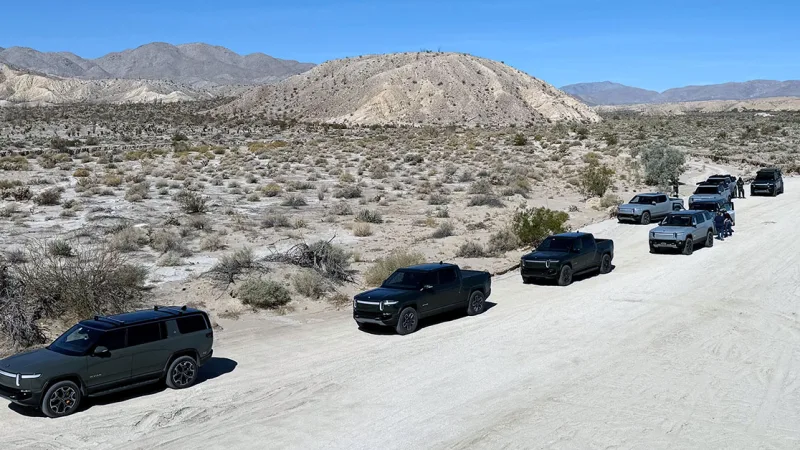
I’ve been driving electric since 2019, and while the day-to-day ownership experience has become seamless, longer adventures still demand careful preparation. Recently, I planned a multi-day EV road trip with my Rivian R1T to Anza-Borrego, and the preparation process highlighted both how far we’ve come and where challenges still exist.
Pre-Trip Inspection: The Reality of EV Road Trip Prep
Before any serious EV road trip, I always start with the basics. After some sidewall damage from my last Joshua Tree adventure, I needed America’s Tire to inspect my Rivian’s tires. The customer service there remains phenomenal – they do a complete inspection, check tread wear, and provide honest assessments.
The technician found enough protection remaining in the sidewall layer, meaning I was clear for the trip. No pressure loss after weeks confirmed the damage wasn’t critical. This kind of pre-trip inspection applies to any vehicle, but with EVs, you’re often traveling longer distances between “fill-ups,” making reliability even more crucial.
Charging Strategy: The Real Challenge of EV Road Trip Planning
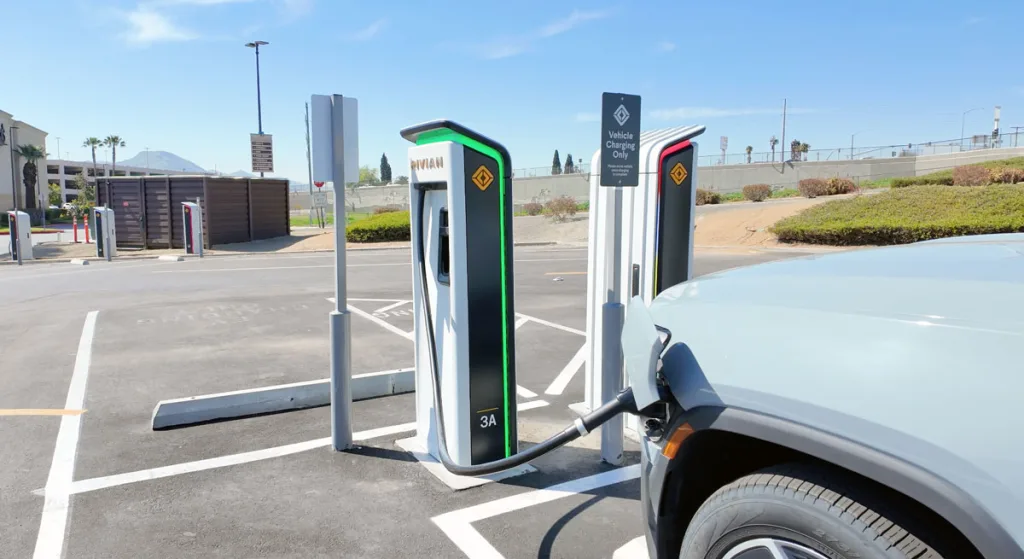
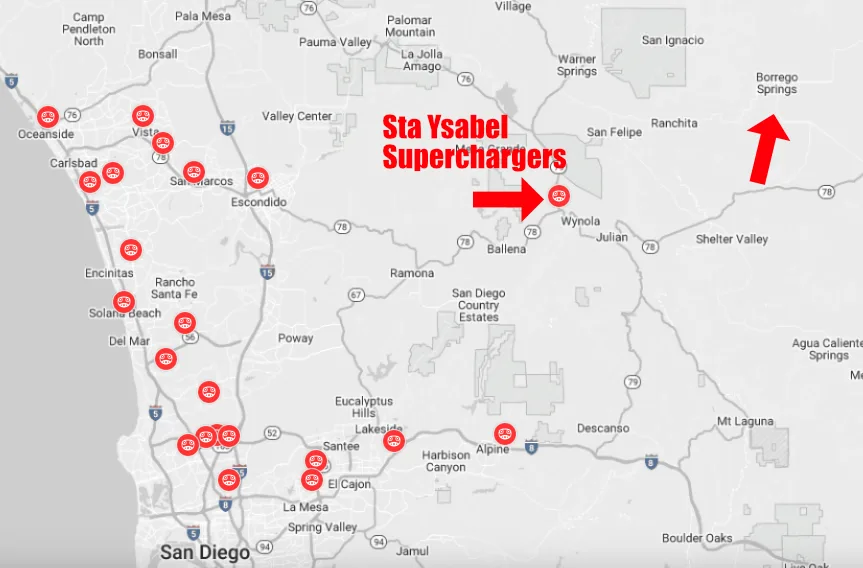
Here’s where EV road trip planning differs significantly from gas car travel. My destination required charging at San Bernardino Rivian Adventure Network before heading to the Santa Ysabel meeting point. At 68 cents per kilowatt-hour, these rates match Electrify America’s expensive pricing – thankfully, referral credits still covered my charging.
The real challenge came with the destination charging situation:
- Only 8 Tesla Superchargers available at Santa Ysabel
- Non-V4 chargers require Rivians to occupy two parking spaces
- Effective capacity: Only 4 Rivians can charge simultaneously
- Shared access: Other EVs and Teslas use the same network
- Meeting time: 7:30-8:00 AM arrival reduces competition but doesn’t eliminate it
The 4:30 AM Wake-Up Call: EV Road Trip Logistics
My departure strategy involved charging to 93% overnight, then waking at 4:30 AM for a final top-off to 100%. This aggressive charging approach wasn’t about range anxiety – my R1T easily handles 300+ mile trips – but about charging etiquette and logistics.
Arriving at the group meeting point with 50-60% charge meant minimal Supercharger time, leaving spots available for others. If I arrived at 20-30%, I’d monopolize a charging space for 30+ minutes, reducing capacity for the group.
Essential EV Road Trip Gear
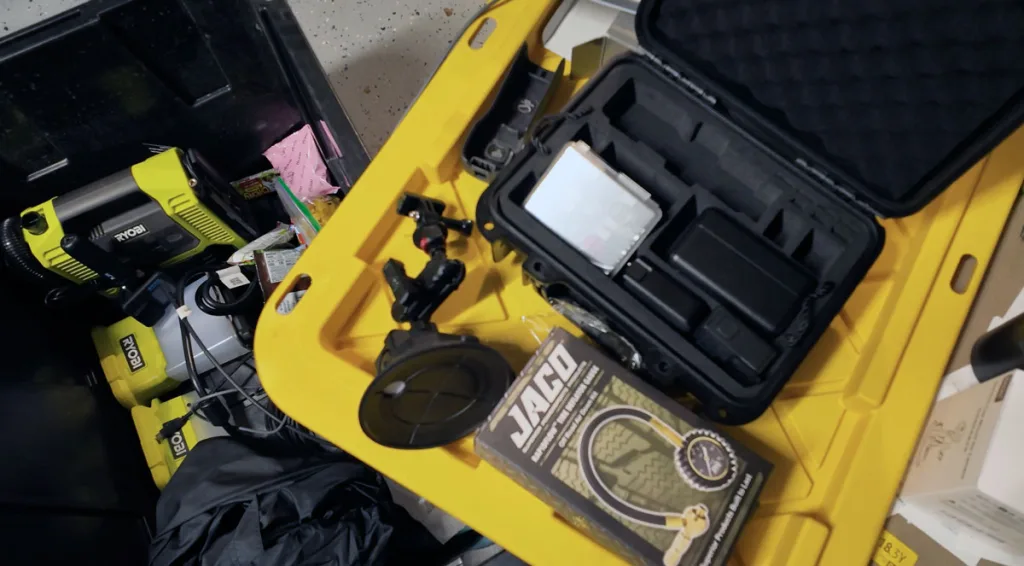
Beyond normal road trip supplies, EV road trips benefit from specific equipment. My packing list included: (affiliate links)
- Anker portable battery: Keeps devices charged during remote stops
- Ryobi air compressor: Essential for off-road adventures requiring tire pressure adjustments
- Tire deflator tool: Enables proper off-road tire pressure management
- Starlink internet: Connectivity backup in remote areas
- Multiple recording equipment: Document the journey properly
- Walkie-talkies: Group communication in areas with poor cell coverage
- Digital Tire Pressure Gauge
- Starlink Mini suction cup mount
- DJI Osmo Pocket case
- Dashcam suction cup mount
The Reality Check: EV vs Gas Car Travel
Operating an EV isn’t inherently difficult – the same physics apply to both electric and gas vehicles. The fundamental difference lies in infrastructure density. Gas stations exist everywhere; DC fast chargers require more strategic thinking.
This planning requirement isn’t necessarily negative. It forces more intentional travel, often leading to interesting stops and discoveries. The key is accepting that EV road trips currently demand more upfront planning than grabbing keys and driving.
The infrastructure continues improving rapidly. Tesla’s Supercharger network expansion and other manufacturers’ charging investments mean this planning complexity decreases each year. For now, successful EV road trips require embracing the planning process as part of the adventure.
Ready to plan your own electric adventure? Start with route mapping, identify charging stops, and pack the right gear. The payoff – quiet, smooth travel with zero local emissions – makes the extra planning worthwhile.

Leave a Reply