

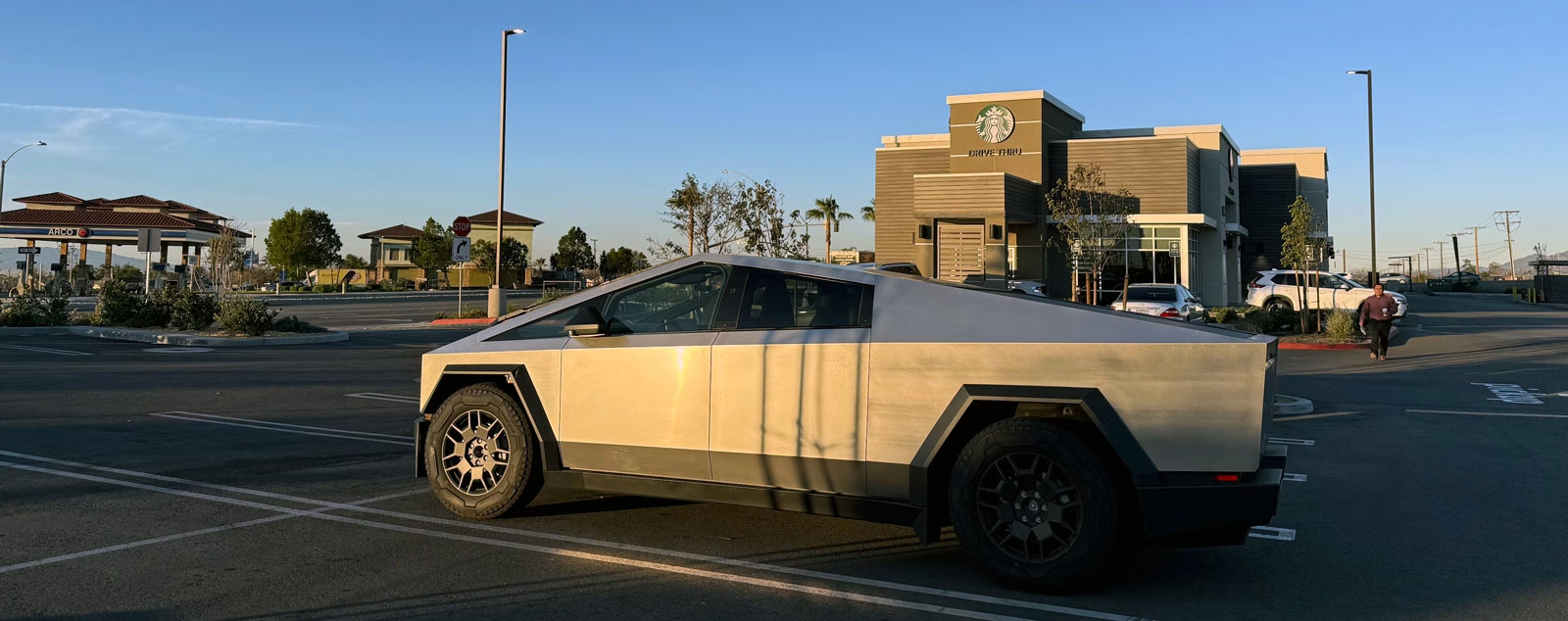
I’ve had the truck for about six days, and it was time to put it through its first real-world work commute.
I’m a numbers guy, so I spent the day tracking every kilowatt-hour to see how this stainless steel beast stacks up against my previous daily drivers: the Model X Plaid, the Model Y Performance, and the Rivian R1T Dual-Motor Performance. We’re talking cost per mile, charging speeds, and even a quick comparison to the gas-guzzling competition.
The Commute: Real-World Efficiency
My commute is mostly freeway miles, which usually favors constant speeds. Leaving the house at 55% state of charge, the truck predicted I’d arrive at work with 38%.
The results were surprising:
- Arrival SoC: 43% (I beat the estimate by 5%!)
- Energy Used: 13 kWh
- Average Efficiency: 264 Wh/mi (for the morning leg)
Now, it’s important to note that my drive to work has a slight elevation decline, which helps. On the way back home, the incline and some light traffic pushed the daily average to about 342 Wh/mi. For a truck this size, that is remarkably efficient. By the end of the day, my lifetime average on the Cybertruck dropped from over 400 Wh/mi to a much more respectable 388 Wh/mi.
Technical Hiccups & Service Update
It wouldn’t be a new Tesla delivery without a few technical quirks. I noticed that my provided key cards weren’t synced to the car. Interestingly, they weren’t even the correct “triangle” shaped cards designed for the Cybertruck—they looked like standard Model 3/Y cards.
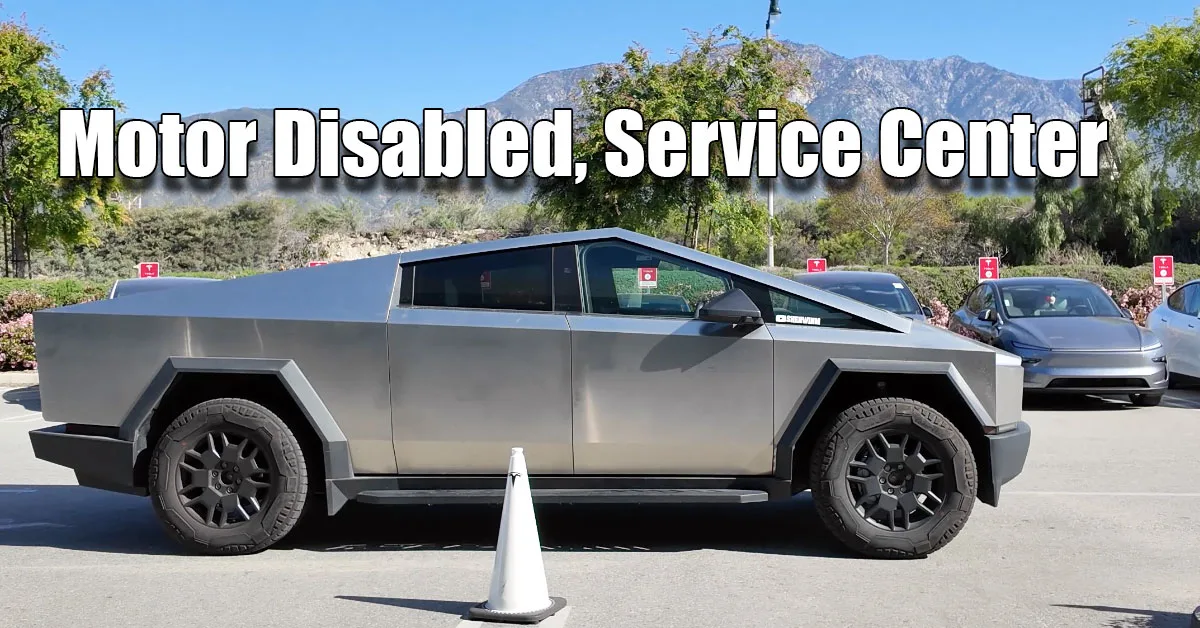
I swung by West Covina Tesla during lunch to sort it out. While I was there, I checked in on my service appointment for that stainless steel scratch and alignment issues. The team confirmed that these should fall under warranty, even though it was a demo vehicle, but they’re keeping the estimate as a formality for now.
Charging Speed: Pushing 200+ kW
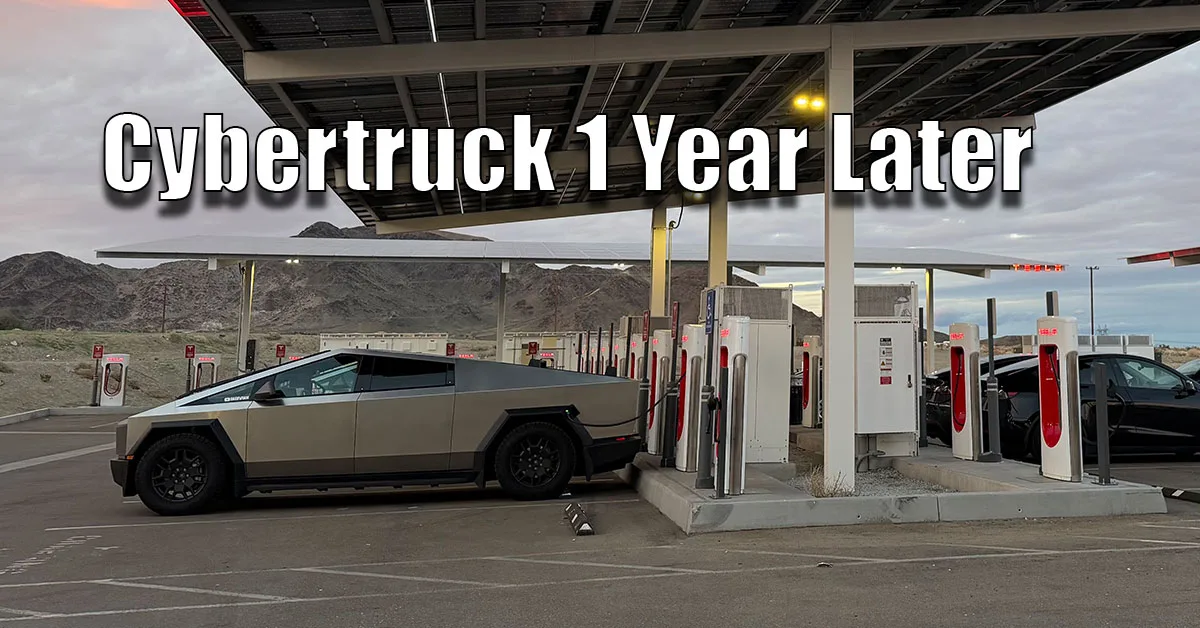
I did a quick top-off at the West Covina supercharger (v3, 250 kW). Arriving at 33% SoC, the Cybertruck really showed off its charging curve:
- Max Speed Observed: 203 kW
- Comparison: At 33%, my Model X Plaid would usually be tapering down to around 180 kW. The Cybertruck’s 800V architecture (even when stepping down for v3 chargers) feels punchy and holds higher speeds longer than the older S/X packs.
The Big Comparison: EV vs. Gas
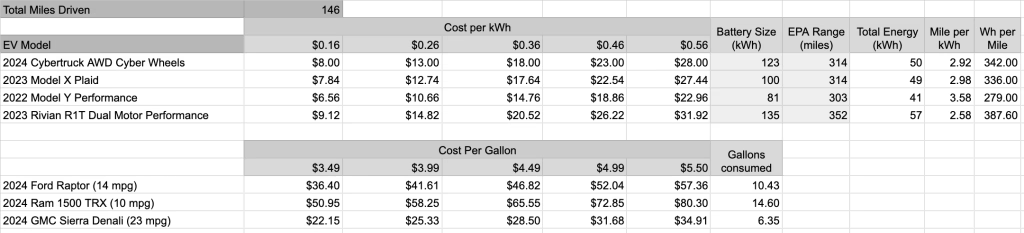
I’ve compiled a data sheet (available on my Google Drive!) comparing the cost of driving 146 miles in various vehicles based on California’s average electricity rate of $0.36/kWh.
Daily Cost Comparison (146 Miles)
| Vehicle | Efficiency (Avg) | Cost to Drive ($0.36/kWh) |
| Tesla Model Y Performance | 280 Wh/mi | $14.71 |
| Tesla Model X Plaid | 335 Wh/mi | $17.64 |
| Tesla Cybertruck | 342 Wh/mi | $18.00 |
| Rivian R1T Dual-Motor | 390 Wh/mi | $20.52 |
The Gas Competition (Gas at $3.99/gal)
- Ford Raptor (14 MPG): $41.61
- GMC Sierra Denali (23 MPG): $25.33
- RAM 1500 TRX (10 MPG): $58.25
The data is clear: even with California’s high electricity rates, the Cybertruck is roughly half the cost to operate compared to a Ford Raptor and nearly three times cheaper than a RAM TRX.
Final Thoughts
The Cybertruck is proving to be a highly capable daily driver. If my commute stays consistent, I’m looking at roughly $360/month in charging costs (if I wasn’t using my 3 months of free supercharging). Compared to $800+ a month for a TRX, the ROI on this truck starts to look very attractive.
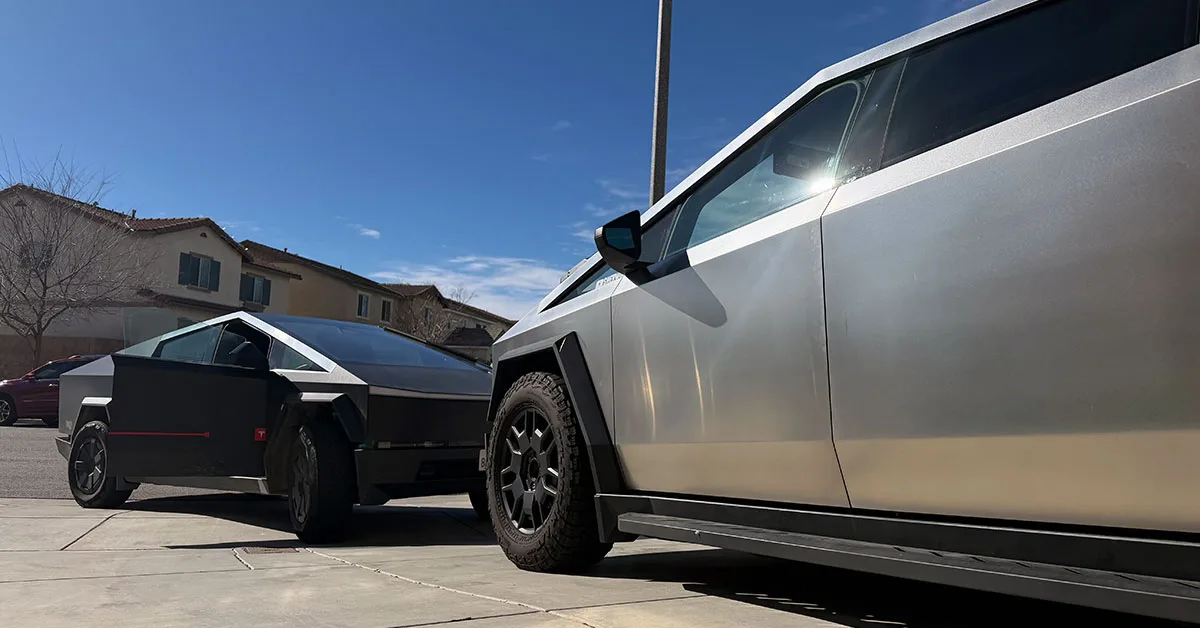
[…] driving the Cybertruck for over a week, jumping back into the Rivian feels a little weird, but it’s time for some […]