Uber’s $1.25B Rivian Bet: 50,000 R2 Robo-Taxis are Coming
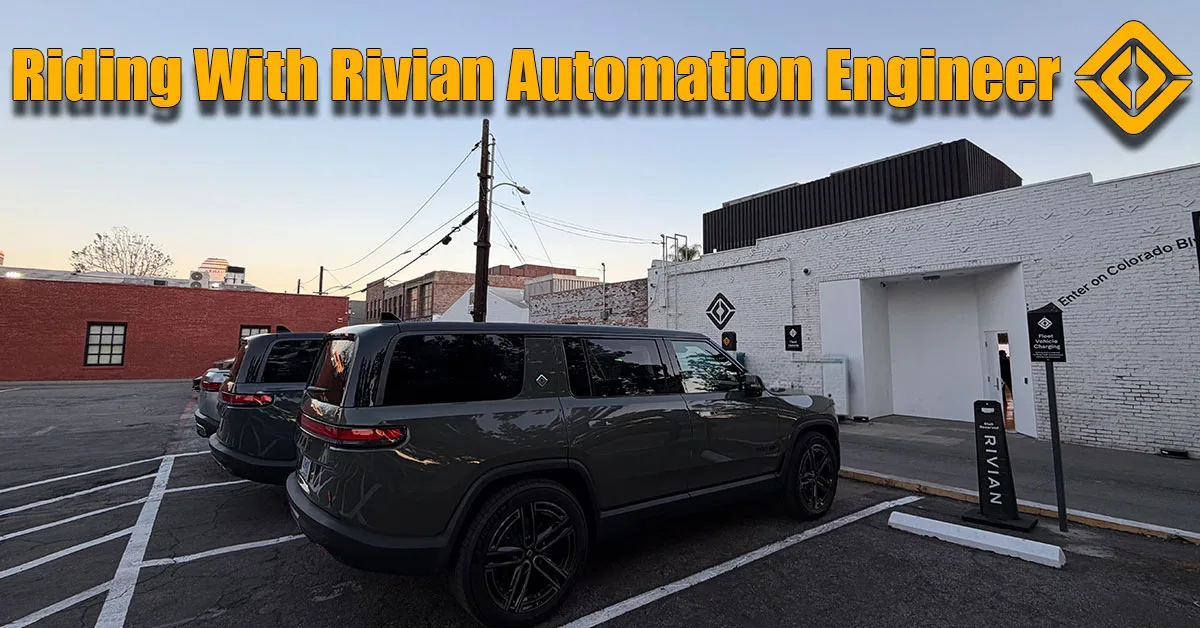
I’m coming to you from the driver’s seat of my R1S. I woke up to some absolutely massive news in the EV world that I just had to talk about. If you haven’t heard, Uber is officially committing $1.25 billion into Rivian. This isn’t just a simple investment; it’s a partnership that aims to put 50,000 Rivian Uber deal R2 robo-taxis on the road by 2031.
As someone who lives and breathes tech, this news is exciting for a lot of reasons. We’re talking about a transition from driver-assisted tech to full Level 4 autonomy. I’m currently driving with Rivian’s Universal Hands-Free (UHF) enabled, and while it’s impressive, the jump to what Uber and Rivian are planning is on another level. Let’s break down exactly what this $1.25B means for Rivian, for Tesla, and for your next vehicle purchase.
The Details of the Rivian Uber Deal
The core of this partnership is the production of R2 robo-taxis. Uber is betting big on Rivian’s hardware and software stack. The plan is to start with an initial 10,000 R2 units by 2028, scaling up to a full fleet of 50,000 by 2031.
Why Rivian? It comes down to their vertically integrated approach. Like Tesla, Rivian develops everything in-house—the hardware, the software, and most importantly, the autonomous processing platform. This “all-in-one” philosophy is exactly what a giant like Uber needs to ensure reliability when they eventually remove the human driver from the equation.
Gen 2 vs. Gen 3: The Autonomous Leap
If you’re a technical geek like me, the real story here is the hardware evolution. Right now, my R1S and the first batches of the R2 are running on Rivian’s Generation 2 autonomous platform. But the robo-taxis? They are destined for Generation 3.
There are three major pillars that separate these platforms, and they are game-changers for the Rivian Uber deal fleet:
- Enhanced Cameras: The resolution and low-light performance are getting a major bump.
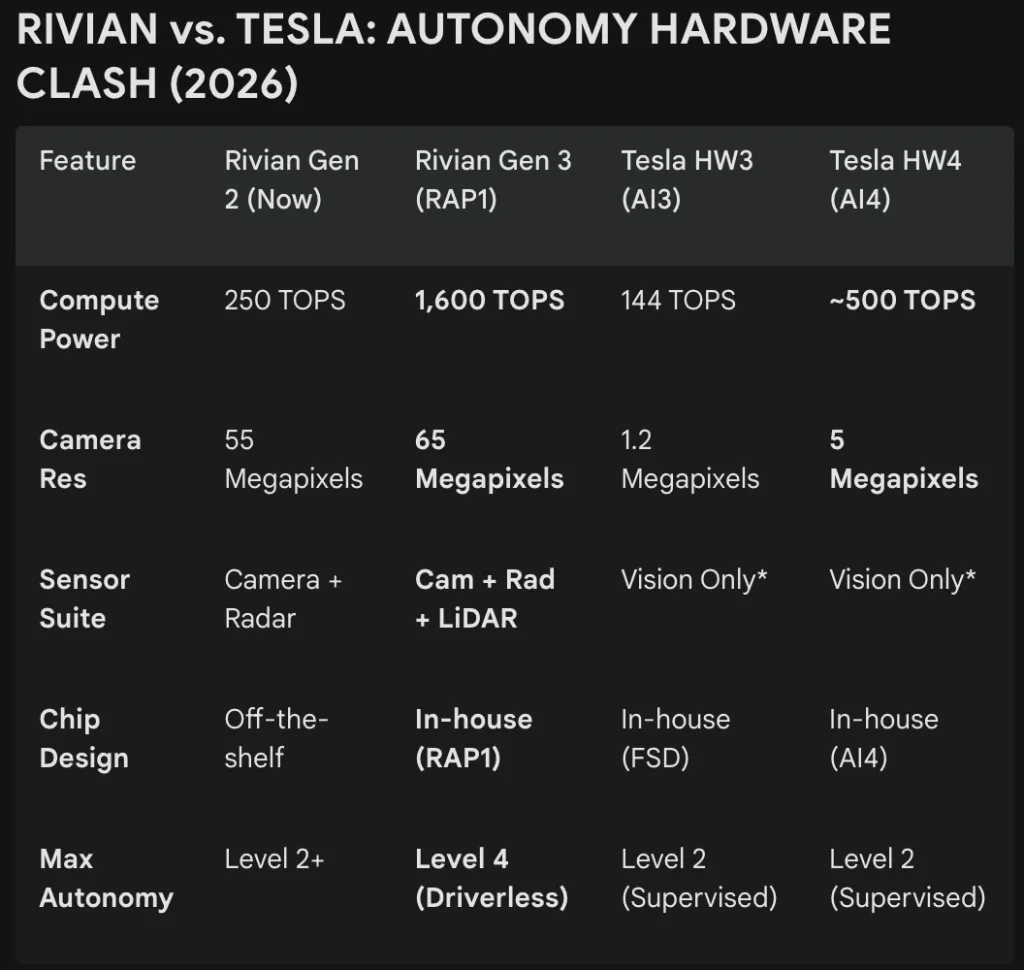
- LiDAR Integration: Unlike Tesla, which has pivoted almost entirely to “Vision Only,” Rivian is doubling down on LiDAR. This provides a “second source of truth,” helping the car navigate complex environments more robustly.
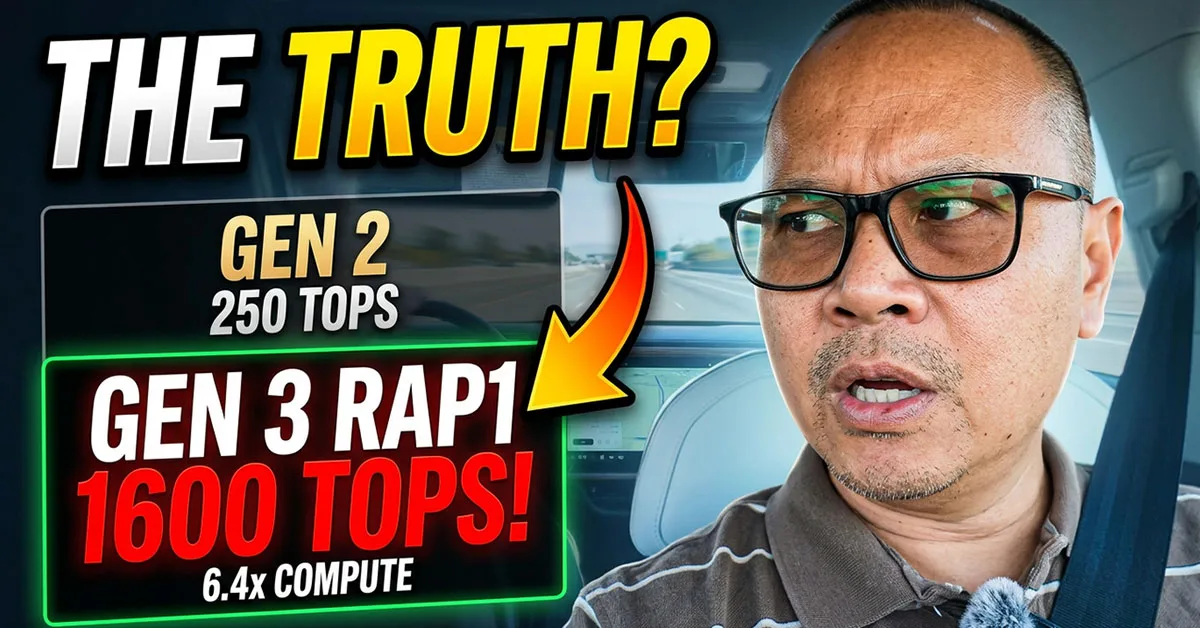
- The RA Processor: This is the big one. The Gen 2 platform processes around 250 TOPS (Tera Operations Per Second). The Gen 3 platform is targeted to hit a staggering 1,600 TOPS. We’re talking about a six-fold increase in raw processing power.
Tech Specs: Rivian Autonomous Platforms
| Feature | Generation 2 (Current) | Generation 3 (Robo-Taxi) |
|---|---|---|
| Processing Power | 250 TOPS | 1,600 TOPS |
| Primary Sensor | High-Res Cameras | Enhanced Cameras + LiDAR |
| Autonomy Level | Level 2 (Supervised) | Level 4 (Driverless Target) |
| In-House Hardware | Rivian Autonomous Platform | Rivian RA Processor |
| Availability | Available Now / R2 Launch | Late 2026 / 2028 Fleet |
Why LiDAR is the “Source of Truth”
I’ve had a lot of experience with Tesla’s FSD and Rivian’s UHF, and the debate between Vision vs. LiDAR is real. I recently spoke with a Rivian autonomy engineer, and he explained that LiDAR isn’t necessarily about adding new capabilities so much as it is about adding robustness.
In my experience, “phantom braking” is the biggest hurdle for autonomous tech. In my old Model 3, the cameras would get tricked by shadows under overpasses or flashing yellow lights, causing the car to slam on the brakes. With LiDAR, the car has a laser-based map of the world that doesn’t care about shadows. It knows if there’s a physical object there or not. For a robo-taxi fleet that Uber wants to run 24/7, that extra layer of safety is non-negotiable.
My Experience with Universal Hands-Free (UHF)
Right now, I’m on the free trial of Rivian’s Universal Hands-Free. I’ve taken it on road trips to Vegas, and overall, it feels very similar to Tesla’s Enhanced Autopilot. It’s excellent on the freeway, but it has its limits.
For example, UHF currently won’t stop for stop signs or red lights unless there’s a car in front of it to act as an obstacle. It’s not that the hardware can’t do it; the code just hasn’t been released for the streets yet. Rivian is pushing updates every month, and the progress is steady. But if we want to get to Level 4 by 2031, Rivian has to bridge that gap from “Highway Assist” to “Point-to-Point” city driving.
The Competition: Rivian vs. Tesla
It’s impossible to talk about the Rivian Uber deal without mentioning Tesla. Tesla is undoubtedly ahead in terms of data collection and real-world miles on FSD. However, competition is good for everyone. It pushes innovation.
Uber going with Rivian suggests they want a partner who is willing to integrate LiDAR and perhaps offers a more flexible platform for their specific robo-taxi needs. By 2031, if Rivian hits Level 4, where will Tesla be? Probably at Level 5. But having two major players fighting for autonomy dominance means we, the consumers, get better software and safer roads.
Should You Wait for the R2?
I have a reservation for an R2, but I haven’t pulled the trigger on a purchase yet. I love my R1S because it’s a seven-seater. Moving to an R2 would mean having two 5-seater cars in the garage (along with my Model Y), and I’m not sure I’m ready for that.
However, if you’re looking for a Launch Edition R2, Rivian is offering a sweet deal: lifetime access to the autonomous platform. Normally, that’s $49 a month or $2,500 upfront. If you’re planning on keeping the car long-term, that’s a huge value. Just keep in mind that the very first R2s will be Gen 2 hardware. If you absolutely want that 1,600 TOPS Gen 3 processor, you’ll likely be waiting until late 2026.
Final Thoughts
Technology is moving at a breakneck pace. Seeing Uber drop over a billion dollars into Rivian tells me that the future of transportation isn’t just electric—it’s autonomous. Whether you’re a Tesla fanboy or a Rivian enthusiast, we are living in the golden age of automotive tech.
I’m going to keep testing UHF and tracking every update Rivian sends out. Stay tuned for the behind-the-scenes content on how I’m documenting this journey!
Check out the full video below.