

We’ve officially hit the two-month mark of ownership with this dual-motor, non-Foundation Series Cybertruck, and I’ve been busy taking notes on my iPad to give you the most comprehensive breakdown possible.
Currently, the odometer sits at 8,417 miles. Since we bought this as a demo vehicle with 2,000 miles already on it, I’ve personally put about 6,400 miles on it in just over 60 days. That is a lot of driving, even for Southern California standards!
The Model X “Buyback” Context
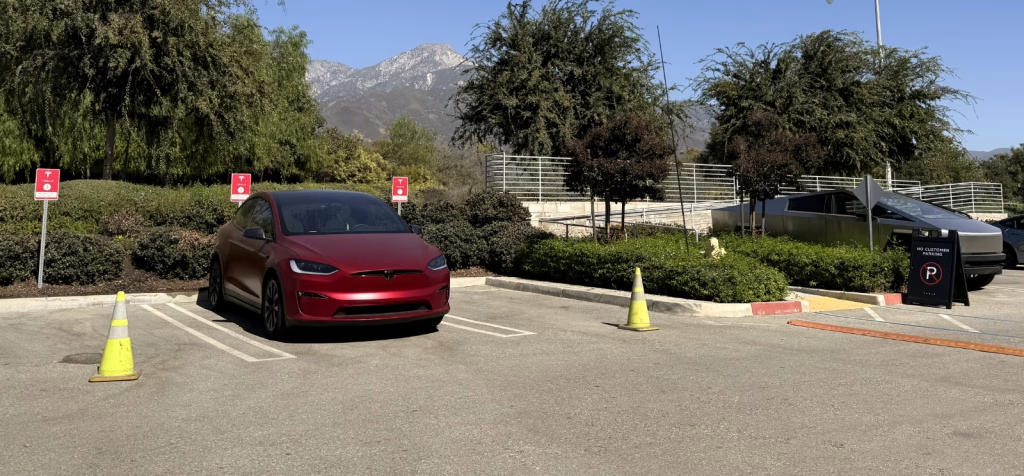
To understand why we have this truck, you have to know what came before it. We owned two consecutive Tesla Model X’s (a 2022 Long Range and a 2023 Plaid). Both ended up as manufacturer buybacks due to non-stop mechanical and sensor issues.
My wife, Abby, wanted a third Model X because she loves the car’s aesthetic and comfort. But after two bad experiences, I had to put my foot down. We needed something reliable that still offered that Tesla ecosystem. After a test drive, the Cybertruck emerged as the only vehicle that matched the Model X’s comfort while offering the utility of a truck.
What I Like: Comfort and Durability
- The Ride Quality: This is the closest feel to the Model X. It’s almost as comfy, though the X still wins on pure suspension softness. The Cybertruck seats sit right in between the firmness of a Rivian and the plushness of a Model X.
- No “Curb Rash” Anxiety: If you own a Model 3 or Y, you know the pain of sticking-out rims. The Cybertruck has thick sidewalls and massive tires. You don’t curb these wheels; you run over the curb.
- Stainless Steel Ruggedness: I don’t baby this truck. Shopping carts, door dings, and fingerprints don’t require the same level of stress as a painted finish. I rarely wash it, and it still looks like a beast.
- Real Physical Buttons: Coming from the refreshed Model X with haptic steering wheel buttons, having real, physical buttons for the turn signals and doors is a massive ergonomic win.
The Vault and Utility
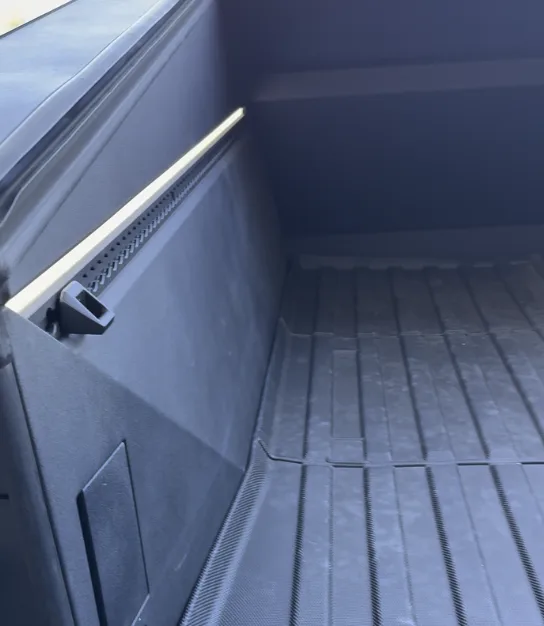
The bed (or “Vault”) is significantly larger than the Rivian R1T’s. The built-in L-Track system is brilliant for mounting accessories, and unlike my Rivian, the Cybertruck has a rear bumper you can actually step on to hop into the bed.
Power on the Go
Tesla finally included outlets! We have 120V in the cabin and both 120V and 240V (NEMA 14-50) in the bed. This was a huge missing feature in our Model X’s and something we used constantly in our old gas minivans.
What I Dislike: The Growing Pains
- Thirsty Efficiency: This truck drinks electricity. I’m averaging over 400 Wh/mile. For comparison, my Model Y Performance averages around 280 Wh/mile. If you want maximum range, you really have to watch your speed and perhaps consider the “Core” wheels.
- Blind Spots: The A-pillar creates a significant blind spot. You have to be extra attentive at four-way stops and when looking for pedestrians during right turns.
- The “Small” Frunk: While it’s powered, the frunk volume is surprisingly small compared to the Model X or Rivian. I use it daily for food storage (to keep smells out of the cabin), but it’s not as cavernous as the truck’s size suggests.
- The Sun Shade Design: At certain times of day (usually between 12 and 1 PM), the sun hits at an angle where the shade simply cannot block it. It’s a design quirk of the high roofline.
Insurance & Financials: The California Reality
Insuring a Cybertruck in California is no joke. Here is the current breakdown for our 3-vehicle fleet with Tesla Insurance:
| Vehicle | Monthly Premium | Annual Mileage |
| Model Y Performance | $197.34 | 16,000 |
| Cybertruck Dual Motor | $308.69 | 33,000 (est.) |
| Rivian R1T (Lease) | $148.26 | 12,000 |
Total Monthly: $654.29 Note: Tesla Insurance recently updated my Cybertruck estimate to 33,000 miles/year based on my heavy driving during the free supercharging period. I’m currently fighting this with their underwriting team!
Energy & Savings vs. Gas
I compared the Cybertruck’s energy costs to an F-150 Raptor (averaging 15 MPG).
- Cybertruck Cost (30 Days / 2740 Miles): $405.36 (at $0.36/kWh).
- F-150 Raptor Cost: $820.17 (at $4.49/gallon).
- Monthly Savings: $414.81 (approx. 50.5% savings).
The Tesla “Ecosystem” Factor
The biggest advantage the Cybertruck has over competitors like the Hummer EV or Ford Lightning is the Tesla Ecosystem.
- Supercharging: Native NACS access. No adapters, no app friction.
- Software: The UI is fast, intuitive, and consistent. My neighbors with Hummer EVs love their trucks but constantly complain about sluggish, non-intuitive infotainment.
- Roaming Profiles: Jumping from our Model Y to the Cybertruck is seamless because all my seat, mirror, and software settings follow me instantly via the cloud.
Final Verdict after 60 Days
Replacing the Model X with the Cybertruck was 100% the right choice for us. It fits our needs for utility, family road trips, and reliability much better than the X ever did. While I miss the whisper-quiet cabin and softer seats of the X, the peace of mind knowing the truck will work every morning is worth the trade-off.