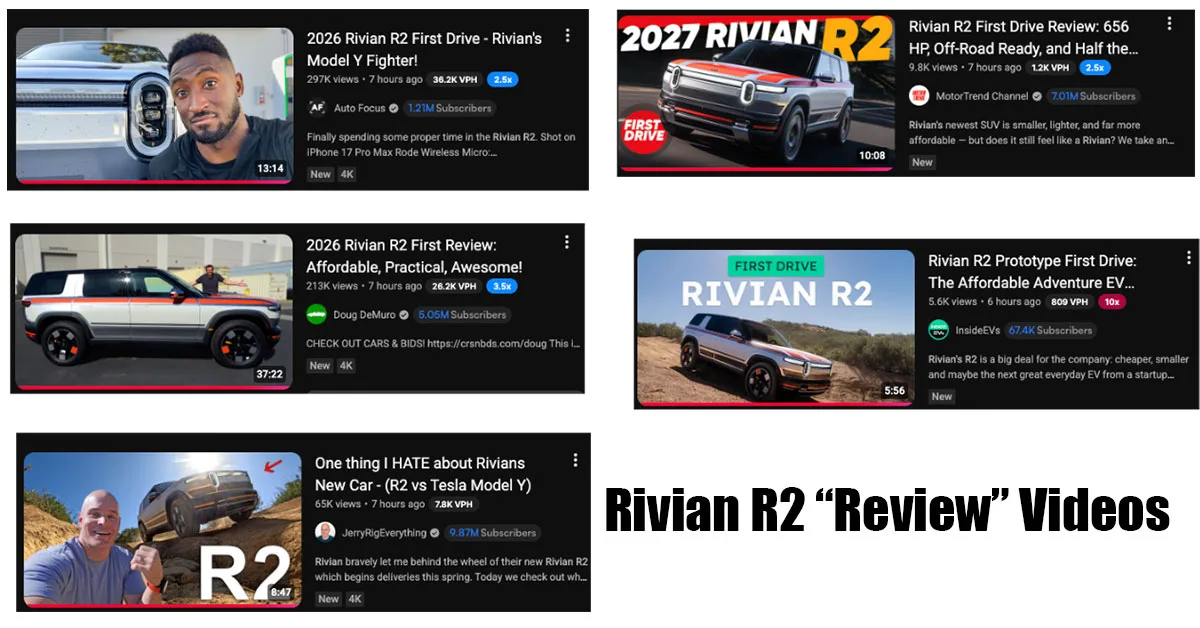
I’ve spent the morning diving into the wave of new Rivian R2 videos that just dropped, and I have some thoughts.
I’ll be honest—if you’re a regular consumer or new to the world of EVs, these videos are great introductions. But as an existing Rivian owner who has lived with the Gen 1 R1T and now a Gen 2 R1S, I was left with more questions than answers. My excitement for the R2 hasn’t diminished, but it hasn’t grown either. I was looking for technical substance, and instead, a lot of what we got felt a bit too “influencer-heavy.”
However, there were some gems in the footage—specifically regarding the UI and physical controls—that have me very excited for the future of the Rivian ecosystem. Let’s break it down.
The UI Revolution: Unreal Engine and New Layouts
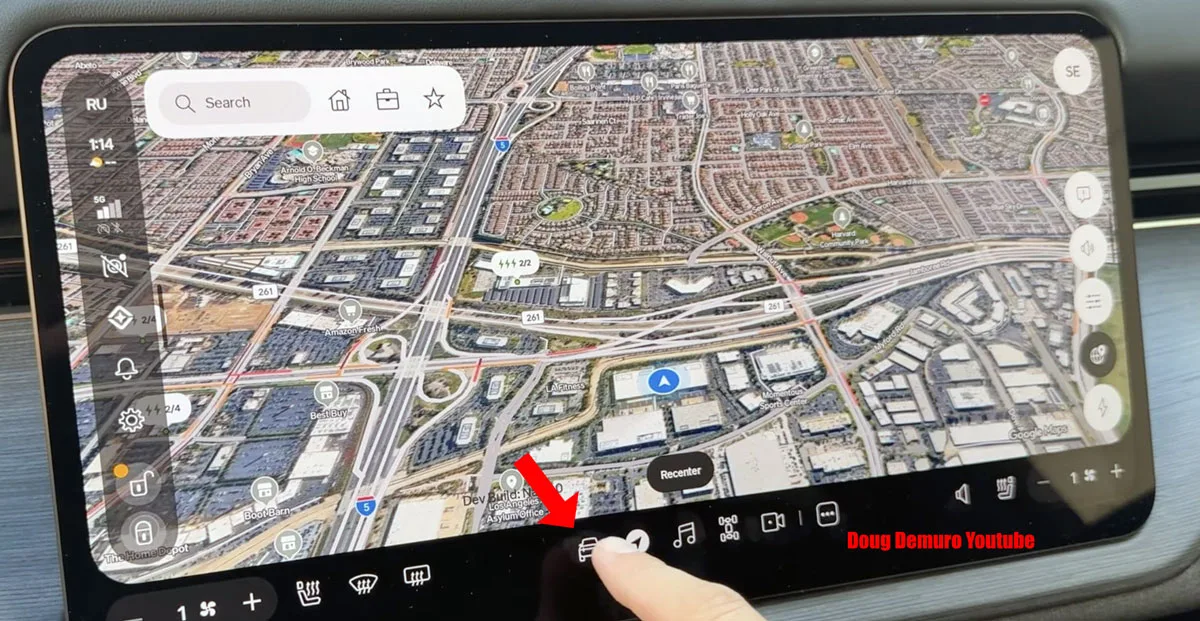
The biggest takeaway for me was the new user interface. It looks incredible. Rivian is reportedly implementing Unreal Engine to power the graphics, and you can see the difference in the responsiveness.
- Shortcut Overlays: They’ve moved the vehicle controls from the top left to a dedicated bottom-row overlay. This makes popping the frunk or trunk much more intuitive.
- Speed: The maneuvering around menus looks lightning-fast compared to the early Gen 1 software.
- The Turn Signal Camera Issue: One “nitpick” I hope they address—currently, when the turn signal camera activates, it blocks vital info on the driver’s display. I often find myself wanting to check volume or other stats mid-turn, and the UI just isn’t there yet.
Steering Wheel Hardware: Scroll Wheels Done Right
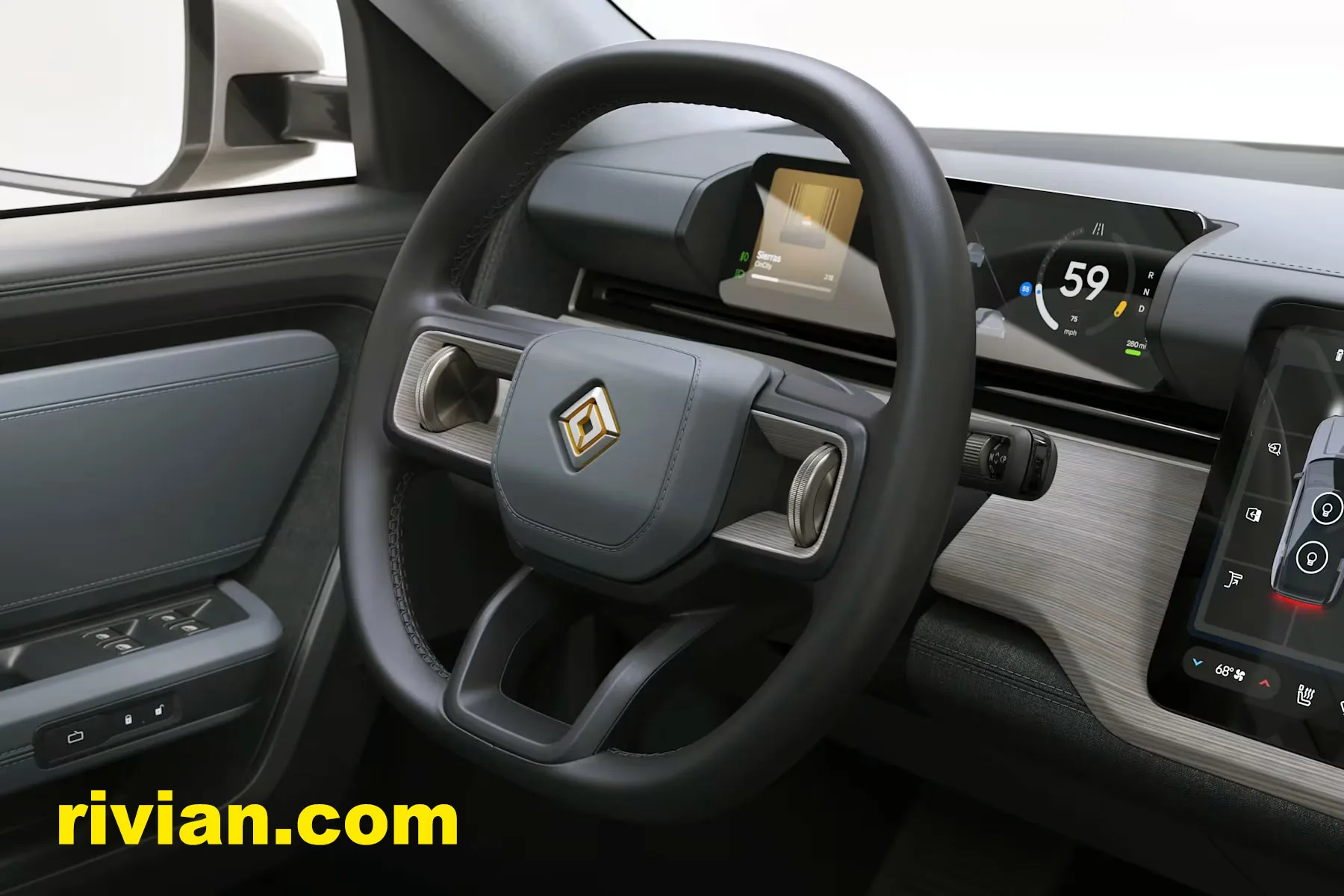
The R2 introduces a new button layout and haptic scroll wheels on the steering wheel that look like a massive step up from the R1 series.
- Physical Resistance: These wheels are capacitive, but they feature physical resistance. When you reach the end of a menu, the wheel actually “stops” you.
- Multi-Directional: They can click side-to-side and even diagonally. This added functionality is exactly what the Rivian platform needs to compete with the ease of use found in Tesla’s current lineup.
Suspension and Chassis: Unibody vs. Body-on-Frame
A major technical shift for the R2 is the move to a unibody construction, whereas the R1 series is body-on-frame.
- Weight Reduction: This significantly reduces the weight of the vehicle, which should help with efficiency and handling.
- The Question Mark: As an off-roader, I wonder how this affects long-term durability and repairability. If you take a hit to the frame in a unibody car, the repair costs can skyrocket.
- No Air Suspension: The R2 will not have air suspension. It remains to be seen if it will use frequency-detecting dampers (like the Model Y Juniper) or a semi-active system.
Charging Performance: The 30-Minute Reality
There’s been some chatter about the R2’s 10-80% charging time taking 30 minutes. Some are calling this a disappointment, but as a Gen 2 R1S owner, it makes sense. Current Rivians struggle with thermal management during high-speed DC charging, especially in the Southwest heat. My R1S often throttles to 120-130 kW in the summer to keep the battery from screaming. By targeting a 30-minute window, Rivian is making a “safe play”—matching the Model Y rather than over-promising and failing to deliver in real-world conditions.
R2 vs. Model Y Juniper: The Ultimate Dilemma
Will I trade my Model Y Juniper for an R2? Right now, I can’t answer that. Tesla has done such an incredible job refining the Juniper refresh—improving the suspension and cabin noise—that it’s a very high bar to clear.
One thing I am curious about: The Ping-Pong Effect. My R1S has a shorter wheelbase than the R1T, which sometimes leads to a “ping-pong” feeling within the lane during Driver+ sessions. Since the R2 has an even shorter wheelbase, will this issue be amplified? This is the kind of technical detail I’m waiting for creators like Out of Spec to dig into.
| Feature | Rivian R1S (Gen 2) | Rivian R2 (Projected) |
| Suspension | Quad-Motor Air | Fixed / Dampened (Non-Air) |
| Chassis | Body-on-Frame | Unibody |
| Outlets | Multiple (2nd Row & Trunk) | Trunk Only (Limited) |
| UI | Standard (Update Coming) | Unreal Engine Powered |
| Controls | Standard Scroll | Multi-Directional Haptic |
The Rivian R2 is going to be a massive hit for the general public, but for those of us already deep in the EV world, the “Gen 2” R1S remains the flagship for a reason. I’m excited to see the software improvements from the R2 trickle down to the R1 platform, but I’m keeping my expectations grounded until I can get behind the wheel myself.